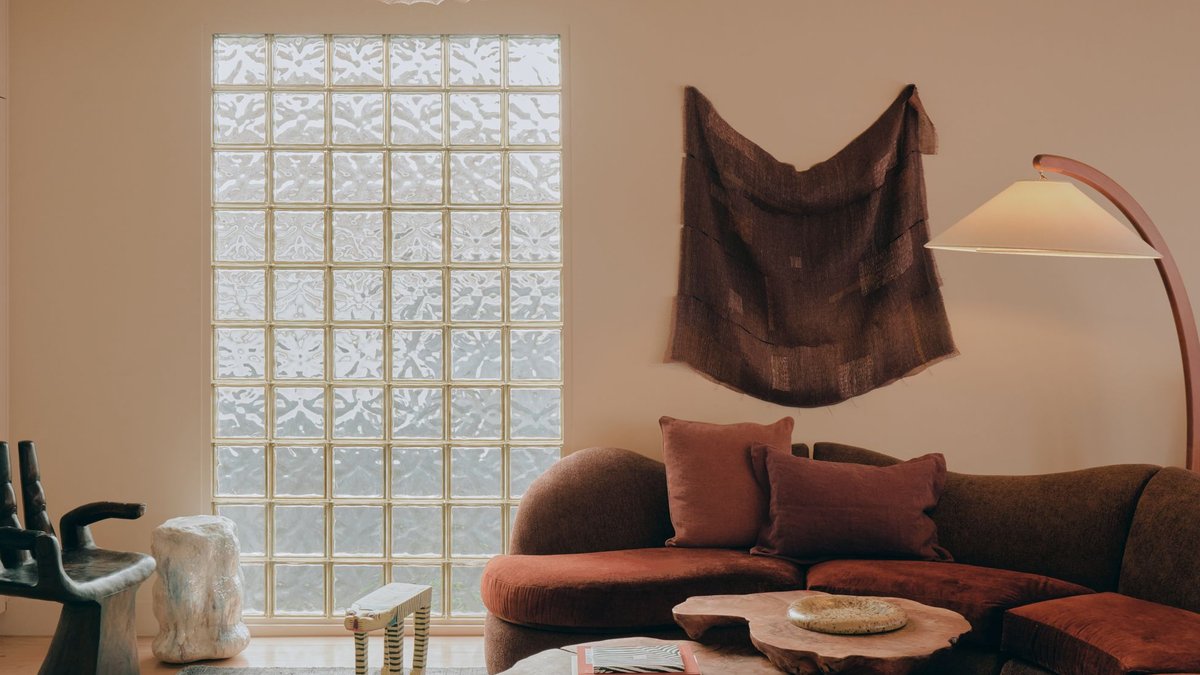
Melbourne designer Shelby Lenehan transformed a plain suburban house into a demonstration of how daylight can change ordinary spaces without requiring a large budget or ideal circumstances.
The project, named Borrowed Light, serves as a home for Kalu Edmunds, founder of Mood Objects, his partner Royce Akers, co-founder of Pep, their two children, and their dog. The house is located in Preston, a neighborhood where many homes prioritize privacy, often resulting in blank walls and frosted glass.
Daylight as the central material
Lenehan, who heads Shelby Ann Studio, avoided that compromise. She used light as the main element, capturing it in fragments from the sky and nearby surroundings. Round skylights above the kitchen and bathroom function as portals, bringing the outdoors inside. Recycled bronze glass bricks in the living room create rippled reflections on the ceiling as sunlight shifts. A reclaimed leadlight entry door projects colored squares down the hallway, changing with the time of day.
Outside, a travertine checkerboard pool mirrors a leaning palm, while golden light filters through trees in the parklands of Merri Creek. “These details let nature shape the home’s atmosphere throughout the day,” Lenehan explained.
The materials were selected for their aging qualities rather than their initial appearance. Dark burl timber from Elton Group adds richness to the kitchen and living area. A brass splashback, intended to develop a patina over time, formed natural swirls after rain exposed parts of it during construction. Quartzite’s organic patterns contrast with the metal, giving the space a natural, earthy feel. Microcement and stone continue this approach in the rest of the house.
Related: M&S ingredient sparks Italy craving after Tom Kerridge recipe
Objects that tell a story
Edmunds, a vintage dealer and collector, filled the home with meaningful pieces. A custom dining table, a reupholstered sofa with curves spacious enough for a family of four, artworks, and ceramics were gathered, restored, or crafted by loved ones over time.
“We wanted a home that adopted daily life, where beautiful items weren’t kept out of reach but became part of it,” Edmunds said. The result feels authentic, not like a showroom.
Many suburban renovations are postponed until conditions improve—when children grow older, finances allow, or pets behave. Borrowed Light shows that none of those delays are necessary. It highlights the value of noticing what’s already present: light used effectively, materials chosen for durability, and objects with personal history.
Lenehan’s work suggests that suburbia doesn’t need special permission to be beautiful. It simply requires careful observation.
The home’s design also reflects how family legacy can reshape spaces with intention and creativity.


