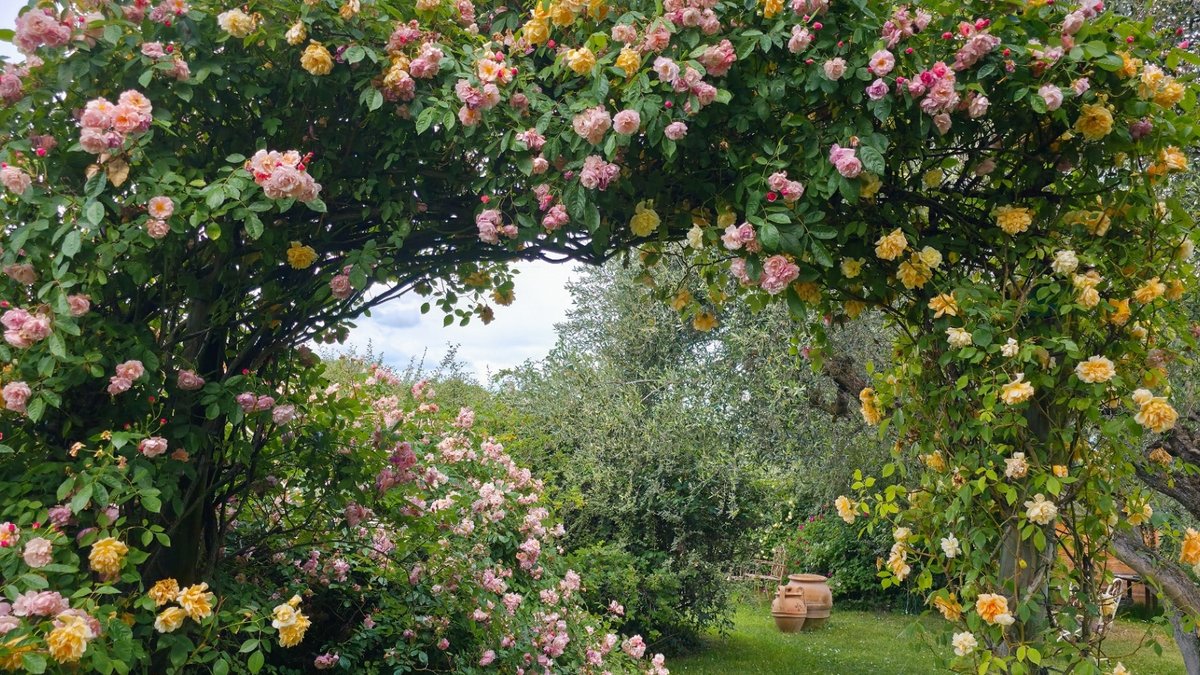
Climbing roses add height, fragrance and colour to a garden, turning walls, fences or arches into living works of art. Their ability to bloom repeatedly from late spring through autumn makes them a popular choice for both homeowners and designers.
How to support a climbing rose
Before planting, decide whether the vine will climb a freestanding arch, a pergola or a sturdy obelisk. The stems grow upright and need regular training; tying them to a support in early growth helps shape the plant and encourages better air flow.
Top climbing roses for scent and colour
Noisette Carnée is a delicate pink rose introduced around 1817 as one of the first Noisette varieties. Its semi-double blooms attract pollinators, and the strong fragrance carries across a garden. The shrub reaches 1.5-2.5 m high and spreads 1-1.5 m.
This cultivar thrives in full sun and is rated hardy to H6. Because it stays relatively low, gardeners should place it where it won’t be hidden by taller plantings.
Bourbon rose debuted in 1843 with large, light-pink flowers and a fruity scent that many describe as sweet. It repeats its bloom cycle from June to November, making it a reliable summer feature. The plant can grow 2.5-4 m tall and spread 1.5-2.5 m.
Hardiness is also H6, and the rose performs well in pots, offering flexibility for patios or small courtyards.
The deep-red climber favored by Vita Sackville-West at Sissinghurst displays semi-double flowers with golden stamens. Its season starts early and continues to autumn, providing colour when many roses are still dormant. The vigorous vine can reach 4-8 m in height and 2.5-4 m in spread.
Although its fragrance is subtle, the plant’s wildlife value is high, attracting bees and butterflies throughout its long blooming period.
Read Also: Top products for cleaning patio moss and algae
Rosa ‘Florentina’ offers a classic, cupped rose shape with large, ruffled petals. The cultivar is noted for disease resistance and produces excellent cut flowers that last long in a vase. Height ranges from 1.5-2.5 m, while the spread can extend to 2.5-4 m.
Its scent is gentle, and the plant prefers full sun. Gardeners often use it on tall obelisks where it can cascade dramatically.
The yellow climbing rose provides a bright contrast to more traditional reds and pinks. Its early start in late spring and continuous flowering into autumn make it a reliable source of nectar for pollinators. The plant reaches 3 m tall with a narrow 1 m spread.
Award-winning climbers
Renowned for its powerful perfume, one of the RHS Award of Garden Merit roses displays semi-double blossoms that shift from bright yellow to a warm orangey hue. The fragrance is so intense it can be detected from a distance, making it a favorite for pergolas where scent can drift across outdoor seating. This cultivar tolerates both full sun and partial shade, thriving on sturdy supports that can bear its thorny canes.
Specialty roses and practical planting
The blooms are rugged and plentiful, creating an almost uninterrupted cascade of flowers from early summer to the close of the growing period. Its pink-tinged stems add visual interest, and the plant demands a substantial support structure to accommodate its height and spread.
While it does not repeat its bloom, the summer display is abundant, and the plant produces abundant hips in autumn, offering food for birds. This variety thrives in sunny or partially shaded locations and benefits from a sturdy trellis that can handle its weight.
When introducing a climbing rose to the garden, planting bare-root specimens in autumn or winter allows roots to establish before the growing season, whereas potted plants can be set in at any time provided the ground is not frozen or excessively dry. Selecting a support that matches the anticipated vigor of the vine—whether a free-standing arch, a garden obelisk, or a pergola—ensures the rose can be trained effectively and maintain good air circulation.
Obelisks such as the large ball-top rusted model from Crocus not only provide the necessary height but also serve as decorative focal points. Incorporating such structures into borders creates a canvas for the climbing rose to showcase its colour, fragrance, and form, turning ordinary garden edges into captivating living displays.


