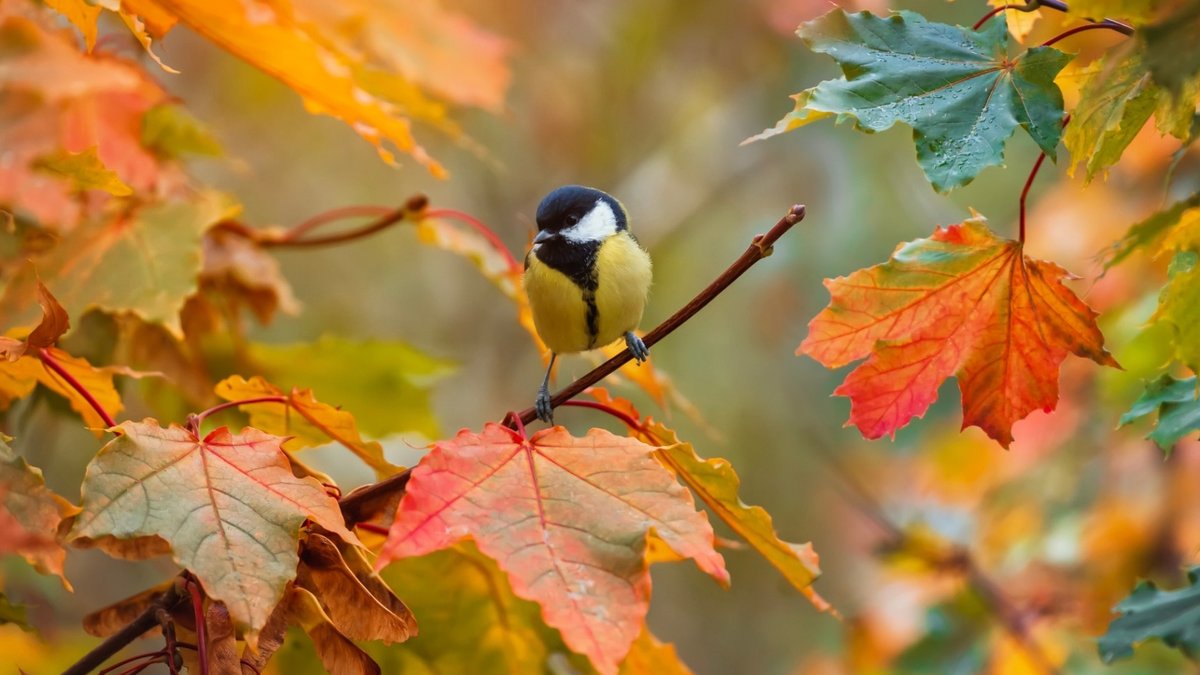
As summer fades, the environment of British gardens shifts with the changing season. Shorter days, ripe berries, and cooler temperatures signal a transition for local wildlife. Migrating and wintering species will begin moving through the UK, while existing visitors seek new sources of sustenance. A garden that supports birds this autumn requires seedheads, berry-laden shrubs, and a clean water source to remain attractive to visitors.
Identifying the Autumn Visitors
Greenfinches and Their Troubles
One of the most distinct arrivals is the greenfinch. Males display an olive-green body with a yellow flash on the wing, while females and juveniles are more brown but retain the yellow streak. These birds possess a chunky beak suited for cracking seeds. They are also fond of fleshy fruit like haws, rosehips, and blackberries. Greenfinches have a delightful song, which includes a distinctive “wheezing” note that helps them stand out from other trilling birds in the hedgerows.
Numbers of greenfinches in gardens have dropped in recent years due to trichomonosis, a disease spread by a parasite. This occurs naturally in the wild but if you see affected birds it’s a good idea to remove your bird feeders for a while. This stops the parasite spreading between finches on busy bird feeders. You can read more about trichomonosis, and how to spot signs of it, here: bird diseases in garden birds.
Read Also: Slug Resistant Hostas for Lush Gardens
The Complex Dunnock
The dunnock, often mistaken for a house sparrow, is another common autumn sight. It is small, brown, and streaked with black, but can be distinguished by a thin, pointy beak and a blue-grey head and breast. Dunnocks prefer the edges of flower beds or near bushes rather than swarming feeders like sparrows do. They are solitary birds that display a nervous, shuffling walk with frequent tail flicking.
Beyond their appearance, dunnocks have a complex social structure. While most birds breed in pairs, dunnocks often have a fluid approach to relationships. Both males and females frequently have multiple partners. This arrangement can benefit the birds, as males who sire chicks with multiple females increase their chances of continuing their family line, and females with multiple partners often receive help raising the young.
The Intelligent Jackdaw
Britain’s smallest crow, the jackdaw, also frequents gardens during this season. They possess a silvery sheen on the back of the head and a pale blue-grey eye. These intelligent birds are comfortable living alongside humans and will readily take food scraps from bird tables or lawns. The bird’s name is thought to come from its calls, a “tchack” noise that could be “jack” and a “kow/caw” sound that might be the “daw”. Alternatively, the word “jack” is often used to refer to smaller versions of larger birds, for example the jack snipe is similar to, but tinier than, the snipe, a wading bird with a long straight beak. So “jack daw” might mean “small crow”.
Read Also: Best Lawn Mowers for Every Garden Size and Budget
Sparrowhawks are among the most agile birds of prey in the UK. They have adapted to hunt in urban centres as well as forests. While numbers are now stable after a significant decline in the 20th century, pesticides remain a threat. Their presence in a garden often temporarily scares off smaller birds, but this does not negatively impact overall bird numbers. Sparrowhawk populations are closely linked to the amount of songbird prey available; if songbirds are abundant, the raptors follow.
Sparrowhawks and Kestrels
This predator is easily distinguished from the kestrel by its flight pattern and wing shape. Kestrels hover on the spot with long, pointed wings, while sparrowhawks keep moving with a “flap-flap-glide” rhythm. They are found all throughout the UK and Ireland, except in the most mountainous areas.
Other Autumn Sightings
Another bird that appears frequently during this season is the magpie. Both sexes are black and white with glossy blue and green markings and a long tail. Magpies have a broad diet that includes beetles, worms, fruit, household scraps, carrion and small animals. They are also known for raiding other birds’ nests, a behavior that has led to superstitious associations with the devil and the underworld in folklore. However, like other members of the crow family, they are curious and intelligent birds that have adapted well to living alongside humans in towns and cities.
Read Also: Summer berry pavlova gets a rum-soaked twist
Another common garden visitor is the collared dove. This pale colored bird is easily identified by the distinctive black ring, or collar, around its neck. It is a fairly new arrival to the UK, having first nested here in the 1950s. Collared doves are seed-eaters, but their young cannot digest seeds while in the nest. Consequently, the parents produce a substance called ‘pigeon milk’ or ‘crop milk’ in their throats, which the chicks can eat. Their three-note call is often compared to a football fan chanting “United, United”.
The Latin name for the collared dove reveals an interesting story. The first part refers to the collar, but the second part, decaocto, comes from an Ancient Greek tale. A maid who was paid only eighteen pieces of silver a year prayed to the gods for her plight to be remembered. Zeus transformed her into a dove that forever calls “deca-octo,” or eighteen. These birds require little effort to attract, though they appreciate a supply of seeds and a dense tree for nesting.