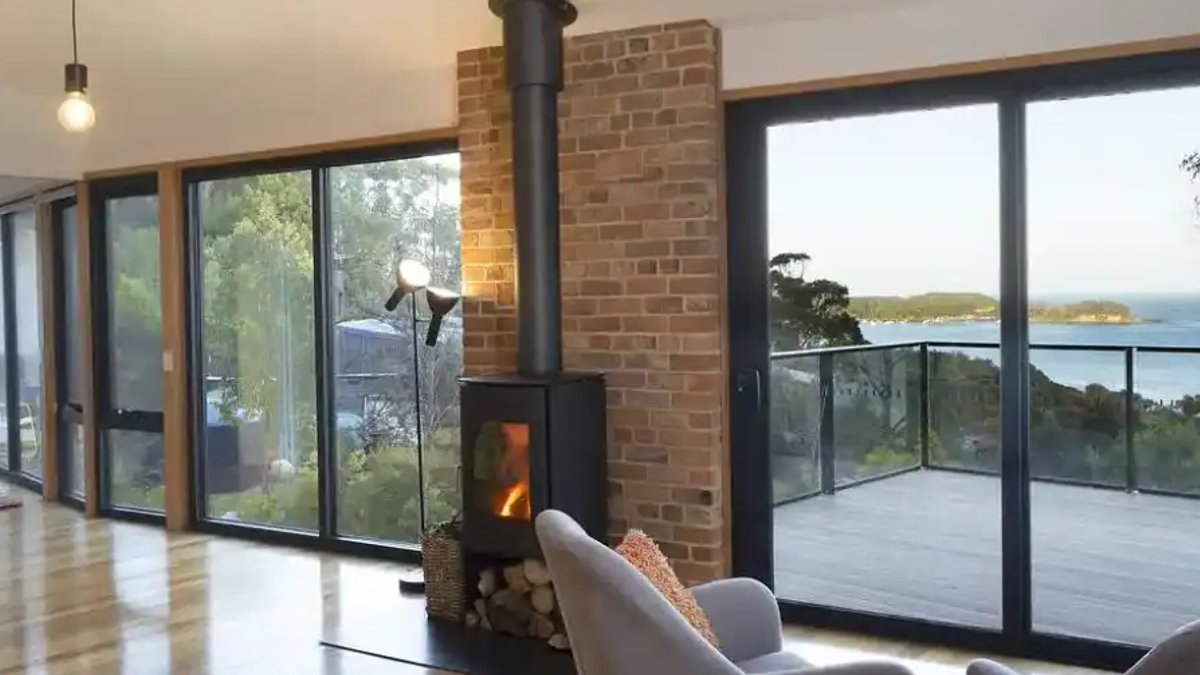
The Eaglehawk Nest Coastal Retreat, located in Eaglehawk Neck, Tasmania, Australia, is a small holiday house that showcases a blend of modest size, environmental performance, and connection to its surroundings. Completed in 2021, the house has a floor area of 83 square meters plus a loft.
The house achieves a 7.5-star energy rating through its highly insulated envelope and minimization of thermal bridging, reducing heating and cooling demand. Its design emphasizes low embodied energy, extending its sustainability beyond operational performance.
Resource efficiency is embedded throughout the house, with features such as rainwater collection for reuse, solar hot water, and an on-site wastewater treatment system. This allows the house to manage its own water cycle and reduce reliance on grid energy.
Despite its compact size, the interior is organized to capture views across the bay from every room, making the house feel larger than its footprint suggests. Recycled materials, including Tasmanian oak and convict bricks, bring warmth and texture to the project.
The use of recycled materials grounds the contemporary house in the layered history of its setting, creating a sense of continuity. The result is a holiday house that feels both light-footed and permanent, with a big environmental and spatial ambition.
The house’s compact plan is generous in experience, efficient in operation, and rich in material character. With a site size of 1552 square meters, the house offers a compelling alternative to oversized coastal homes, showcasing a powerful connection to place and environmental performance.
The house’s connection to its surroundings is a key aspect of its design. The use of natural materials and the emphasis on capturing views of the bay create a sense of harmony between the built environment and the natural world.