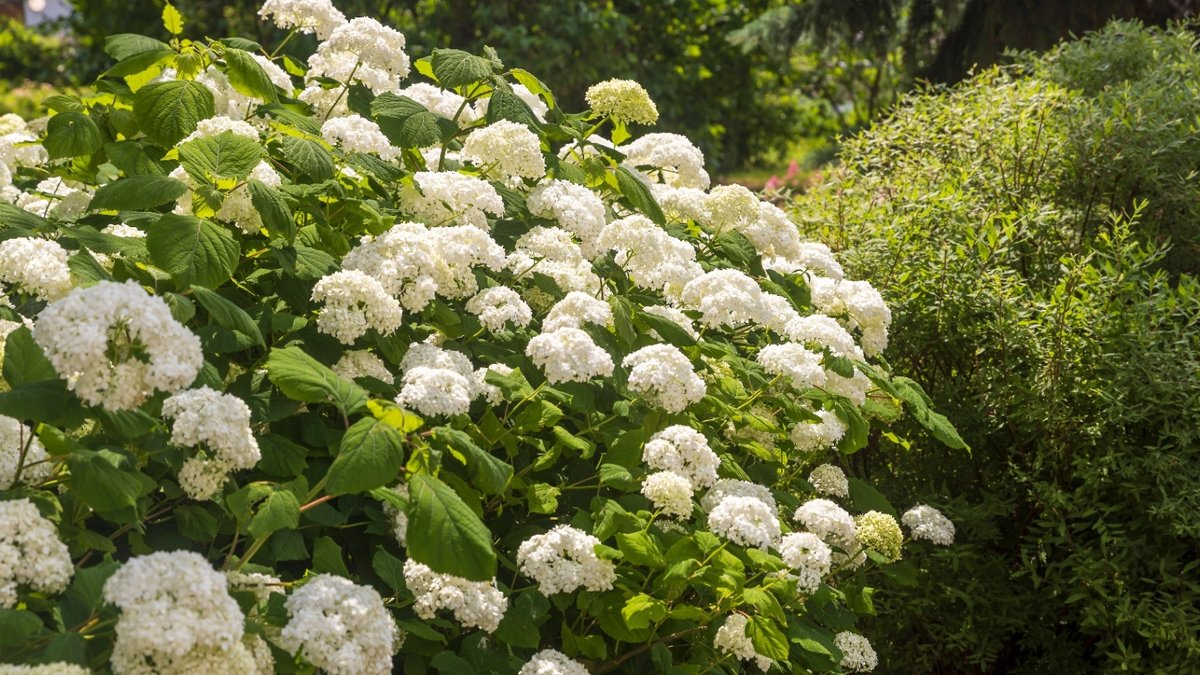
Hydrangeas rank among the most beloved garden shrubs for their striking flowers, versatility, and extended bloom period. They adapt well to sun or partial shade, producing abundant clusters from summer through autumn with minimal care once established. After initial planting, they only require steady moisture and occasional trimming to maintain their best appearance. However, achieving their full potential depends on precise soil management, watering routines, and careful variety selection.
Soil Preparation and pH Management
The foundation of healthy hydrangeas lies in soil quality. These plants thrive in rich, moisture-retaining soil with a pH between 5.5 and 6.5. Bigleaf varieties develop blue flowers in acidic conditions (below 5.5) and shift to pink in alkaline soil (above 6.5). White-flowering types remain unaffected by pH changes. Before planting, a soil test—available from garden centers—identifies pH levels and nutrient deficiencies. Amending the soil with compost, leaf mold, or well-aged manure enhances fertility and water retention, while raised beds prevent waterlogging in clay-heavy areas.
Proper watering is essential, particularly during dry periods. Young plants wilt rapidly in heat because their roots cannot absorb moisture quickly enough to sustain large flower heads. Gardeners should water in the early morning or late evening and provide shade during extreme heat. Mature hydrangeas tolerate drought better but still need consistent moisture. Overwatering, however, leads to root rot and should be avoided.
Fertilizer use demands caution to prevent root damage. Heavy applications at planting time can harm young roots, so a high-potash feed—such as sulphate of potash—should be applied during summer to encourage blooming. Feeding should stop by late August to allow stems to harden before winter. Yellowing leaves indicate iron deficiency, which can be corrected with a sequestered iron supplement.
Read Also: Slug Resistant Hostas for Lush Gardens
Pruning Strategies and Propagation Tips
Pruning methods vary by variety. Mophead and lacecap hydrangeas (Hydrangea macrophylla) produce flowers on old wood and require no pruning beyond removing dead blooms in late spring, after frost risk has passed. In contrast, paniculata and arborescens types benefit from hard pruning in March. Aggressive pruning delays flowering but results in larger blooms, while minimal trimming yields more but smaller flowers.
The simplest propagation method involves softwood cuttings taken in late spring or early summer. Healthy, non-flowering stems should be trimmed just below a leaf node, with lower leaves removed. The cut end may be dipped in rooting hormone before planting in moist, well-draining compost. Covering the cutting with a plastic bag retains humidity, and placing it in bright, indirect light encourages root formation within weeks.
Pest issues are uncommon, but aphids occasionally appear on new spring growth. A strong spray of water typically removes them. More problematic are vine weevils, whose larvae attack roots. Adults can be trapped under upturned pots at night, while larvae are controlled with beneficial nematodes, applied when soil is warm and moist.
Color Control via Soil Chemistry
Color changes in bigleaf hydrangeas depend on soil chemistry. Blue varieties require aluminum, naturally present in acidic, ericaceous soil. Gardeners with neutral soil can use hydrangea colorant—applied to soil or water, to maintain blue tones. Some varieties resist color shifts entirely, while whites develop autumnal hues regardless of pH.
Read Also: Best Lawn Mowers for Every Garden Size and Budget
Notable varieties include ‘Silver Dollar’ paniculata, which produces creamy-white cones that turn pink with age and thrives in full sun or partial shade. ‘Annabelle’ arborescens yields large white globes ideal for cutting but requires wind protection. Oak-leaved hydrangea (Hydrangea quercifolia) features dramatic autumn foliage in bronze and purple, while ‘Villosa Group’ aspera has velvety leaves and lilac-purple blooms that attract pollinators.
For small gardens, compact mophead hydrangeas suit tight spaces, though their blue color fades on non-acidic soil unless treated with a blueing compound every 7 to 14 days. Petiolaris hydrangea climbs walls or fences once established, adding vertical interest with deep green leaves that turn golden in autumn.
Support stakes prevent top-heavy stems from snapping under flower weight. Rust-resistant metal supports, installed in early spring, keep plants upright without damaging bark.
Using Hydrangeas as Cut Flowers
Hydrangeas also serve as excellent cut flowers, lasting up to two weeks in a vase when harvested at the right stage, just as the lower buds begin to open. Their long stems and substantial blooms make them ideal for mixed bouquets, pairing well with roses, dahlias, or eucalyptus. For winter interest, dried hydrangea heads retain their structure and can be bundled with twigs or tied with raffia for rustic decorations. Their papery texture and muted tones complement autumnal color schemes, while fresh blooms in pink, blue, or white add vibrancy to indoor arrangements.

