In Bosnia, architecture has historically been associated with public buildings, leaving domestic space to be inherited or improvised. However, the Treehouse Apartment in Sarajevo is challenging this notion with its innovative design. The 100-square-metre retrofit, designed by Project V Architecture, features a prefabricated Tree House made from locally sourced glue-laminated spruce, providing a unique space for children.
The Tree House is a miniature architecture that combines large furniture and a small house, scaled to a child’s size. It has multiple levels, a lofted space, and built-in stairs, allowing children to climb and explore. The use of local materials and makers, such as Bosnian mass timber factory Krivaja Homes, highlights the importance of sustainability and heritage. This approach not only reduces the carbon footprint of the project but also supports the local economy and preserves traditional craftsmanship.
Design and Materials
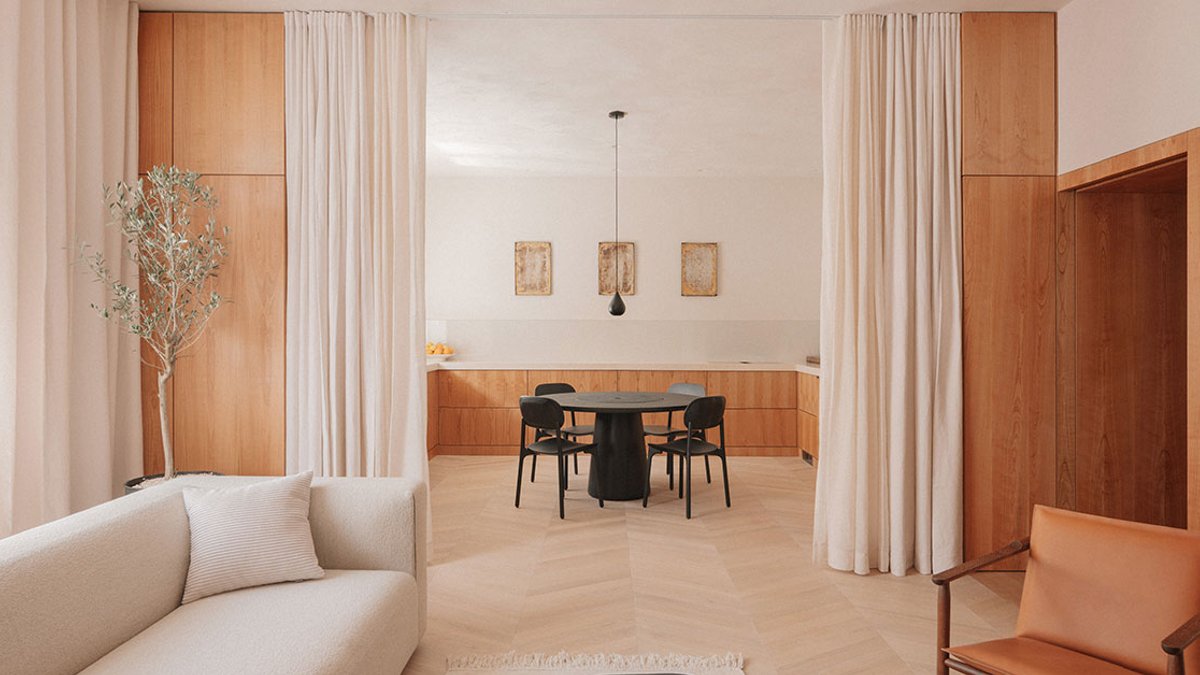
The apartment’s design is centered around a continuous cherry veneer element that serves as an inhabitable skirting board. It begins as a floor border and rises into kitchen units, benches, and wall panelling, absorbing services and storage. This element is described as a horizon line, symbolizing groundedness and merging utility with poetics. The cherry veneer element also creates a sense of continuity and flow throughout the apartment, tying together different spaces and functions.
The hallway is treated as a place to pause, with clay-painted walls and flush cherry cabinetry. Each door leads to rooms with subtly different characters, unified by the use of cherry veneer. The merged kitchen and living room features floor-to-ceiling linen curtains that can be adjusted to tune the space from fully enclosed to semi-sheer to open. This flexibility allows the inhabitants to control the level of privacy and natural light, creating a dynamic and adaptable environment.
Contemporary Bosnian Craft
Contemporary Bosnian craft is showcased throughout the apartment, with pieces from local artisans and craftspeople. The kitchen features Zanat’s Koba Table, alongside bespoke work from independent craftspeople and ceramicists. Artworks by Bosnia-based artists Muhammad Bajramović and Kemil Bekteši draw on the region’s industrial past, threading heritage and labour through the interior. The inclusion of these local crafts and artworks adds a layer of cultural depth and significance to the space, highlighting the importance of preserving traditional skills and techniques.
The bathrooms are lined with travertine and marble, adding a touch of elegance to the space. They reinforce the importance of sustainability and community by using local materials and craftspeople. The use of natural stone also creates a sense of warmth and texture, contrasting with the sleekness of the cherry veneer and the minimalism of the overall design.
A Space for Children
Vernes Čaušević and Lucy Dinnen of Project V Architecture state that this space is for the children and their friends—the future of our society. They hope that the apartment will inspire a deep appreciation for wood, craft, and sustainability in the next generation. By providing a unique and engaging environment, the Treehouse Apartment encourages children to explore, learn, and develop a sense of responsibility towards the environment and their community.
In a country still rebuilding, this ambition is significant. The Treehouse Apartment serves as a model for innovative and sustainable design, one that prioritizes the needs of children and the community. By incorporating local materials and craftspeople, the apartment promotes a sense of heritage and cultural identity. The project also demonstrates the potential for architecture to play a positive role in shaping the future, supporting a sense of social and environmental awareness among its inhabitants.
Architecture can be a powerful tool for shaping the future. The apartment’s design and materials demonstrate this, providing a space that inspires creativity and appreciation for sustainability. The Treehouse Apartment is making a positive impact on the lives of its inhabitants and the broader community. As a prototype for sustainable and community-focused design, it has the potential to influence the development of future projects, contributing to a more environmentally conscious and socially responsible built environment.
It is a unique space.
The apartment is making a difference.


