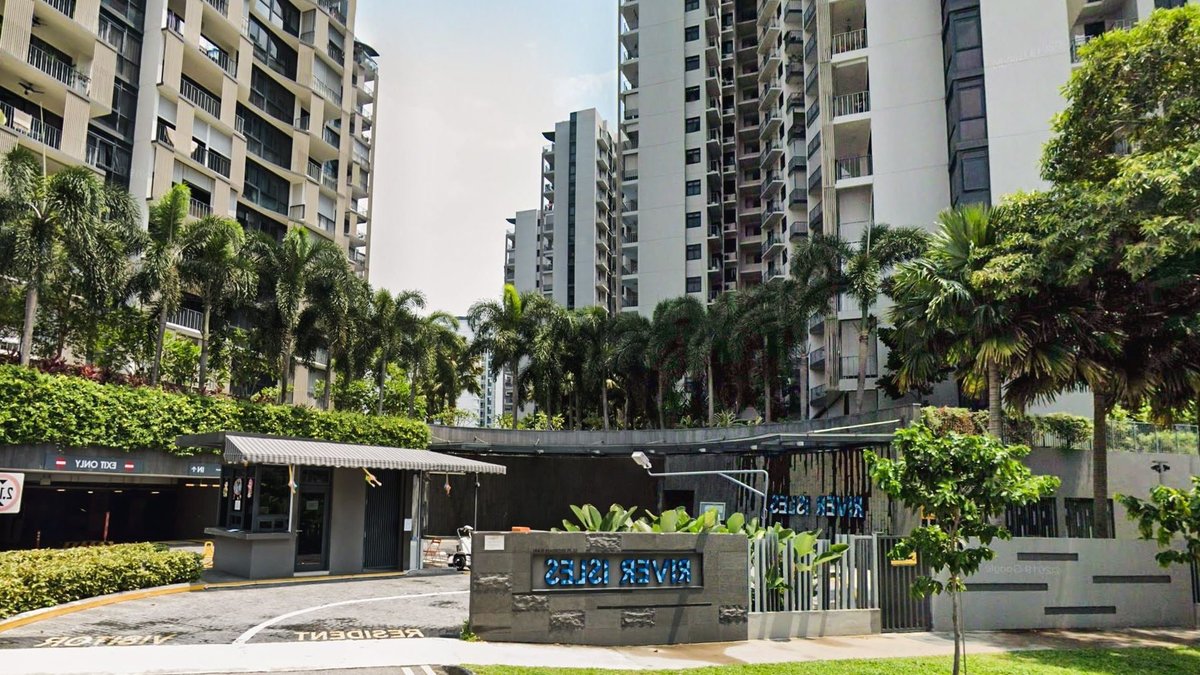
A newly engaged couple decided to buy a two-bedroom resale condo at River Isles for $1.22 million instead of joining the queue for a Sale of Balance Flat in Queenstown. Their choice focused on capital appreciation, rental returns, and the upcoming Riviera MRT station, marking a shift from traditional homeownership toward investment-driven property acquisition. This strategy prioritized market flexibility and timing over immediate affordability concerns.
The couple, unfamiliar with private property markets, treated the purchase as both a future family home and an investment vehicle. They ruled out the Queenstown SBF queue due to limited remaining units and a five-year Minimum Occupation Period that would restrict early sales or rentals. With only about 20 unsold units left in the development, securing one carried uncertainty. Their budget of $1.2 million also excluded new launch projects, where two-bedroom units typically ranged from $1.8 million to $2 million.
Resale HDB flats in Queenstown for four-room units were priced between $800,000 and $900,000, while new Build-To-Order flats cost $400,000 to $500,000. The couple rejected HDB options because the MOP would prevent them from renting or selling the property for five years. A private condo instead offered full control over occupancy, rental decisions, and sale timing.
Assessing Market Reactivity Metrics
He evaluated nine developments in District 19—Waterwoods, The Amore, Waterbay, The Vales, A Treasure Trove, Jewel @ Buangkok, Parc Vera, and Flo Residence—based on price gains against URA indices, regional performance, and sales volume. Projects scoring above 90% were considered strong investments due to their alignment with market cycles.
Selecting the Top Three Developments
The couple shortlisted three developments: Flo Residence, River Isles, and Sol Acres. Flo Residence scored 90.9% but lacked family-friendly amenities. Sol Acres, an executive condo in Choa Chu Kang, was too far from the wife’s workplace in Punggol. River Isles stood out with a perfect 100% score, offering two-bedroom, two-bathroom units ideal for rental or resale. Its location across from Riviera MRT, scheduled to open in 2032, added long-term value.
River Isles had few two-bedroom units available. The couple first bid $1.23 million for a 14th-floor unit but lost to a $1.24 million offer. Later, an 11th-floor unit appeared in August. They submitted a $1.21 million bid, prompting a counter at $1.23 million with conditions: a three-month seller occupancy, rent coverage during the transition, and a 4% exercise fee. The couple accepted, negotiating the final price to $1.22 million.
Securing a $915,000 Mortgage Loan
With a combined monthly income of $20,000, they secured a 75% loan of $915,000. Monthly repayments of $3,200 to $3,600 complied with Total Debt Service Ratio limits. Upfront costs totaled $341,000, covering option fees, CPF contributions, buyer’s stamp duty, and legal expenses. As first-time buyers, they avoided additional stamp duty. The sale will finalize next month, with the seller moving out in March. They plan to rent the unit to service the mortgage and hold it until the MRT opens in 2032, betting on continued price growth.
The “reactivity” metric evaluates projects by comparing their price growth to three benchmarks: URA’s private property index, regional trends, and district performance. A project must exceed 70% of the benchmark’s growth rate across three periods, 2013–2018, 2018–2023, and 2020–2025, to qualify. Consistent sales volume above 12 units annually is another requirement. River Isles achieved a full 100% score, indicating strong market alignment and investor appeal.
Holding Until the 2032 MRT Opening
Although they initially aimed for a four- to five-year hold, they now intend to keep the property until the Riviera MRT opens in 2032. Transit-linked properties typically appreciate faster, and private condos often outperform HDB flats in dollar terms, a 10% gain on a $1.22 million unit yields $122,000, compared to $50,000 on a $500,000 HDB flat.
Their successful negotiation, closing $10,000 below the seller’s counter, relied on offering a three-month occupancy period for the seller. This flexibility, combined with patience after losing an earlier bid, demonstrated how timing and market knowledge can influence outcomes.
Trade-Offs Faced by Owner-Occupiers in Property Purchases
One buyer’s experience likely influenced their strategy, as a friend’s profitable condo sale highlighted potential returns. However, their options were further limited to the private residential resale market, with affordable choices primarily found in suburban areas outside the city center.


