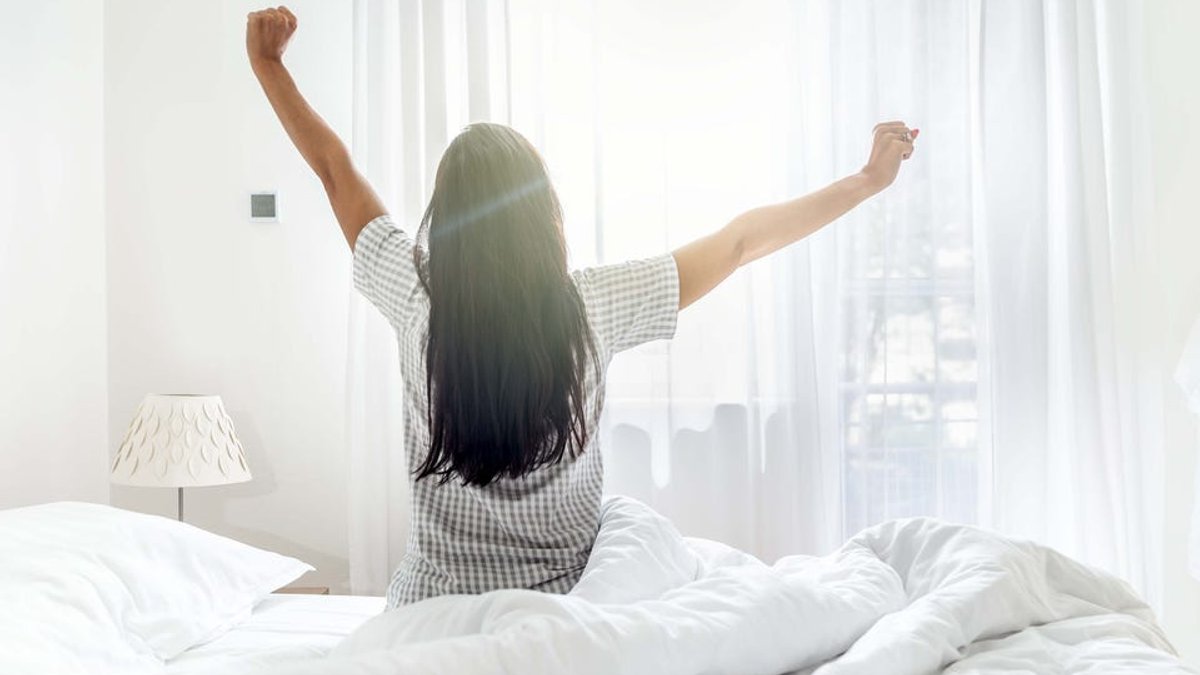
On TikTok right now, early bedtimes are exploding in popularity as users adopt a winding-down hack known as “the grandma nighttime routine.” This trend involves setting oneself up for snoozing as early as 7 to 8 p.m., and these dedicated sleepers report that their new habit makes them more productive, sharper, and happier in the morning. However, going to bed early isn’t a new phenomenon for celebrities—Jamie Lee Curtis was a pioneer of the trend. “Mommy goes to bed early,” she explained in a video interview, and she truly means it. In 2023, the year she won an Oscar, Curtis even declined the chance to attend an Academy Awards dinner so she could stick to her regular 6:58 p.m. bedtime. Another big fan is Amy Poehler, who schedules her dinner to fit her sleep schedule. “To be in bed and have eaten by 8 o’clock!” she enthused to Gwyneth Paltrow on her podcast Good Hang. Paltrow agreed—she’s snuggled under the covers by 8:30 p.m. and feels that an early bedtime “has been amazing” for her overall health.
I also love an early bedtime. Typically, I’m asleep by 9 p.m. because I get up really early, and I find that I feel best if I get seven and a half to eight hours of shuteye. When I heard there may be even more benefits to an even earlier crash time, I was excited to try it. I wondered if an extra hour of quality sleep might be just the ticket to make me feel even better than my best.
Experts say that a really early bedtime can improve your health in lots of ways. “The American Academy of Sleep Medicine recommends that adults get at least seven hours of sleep each night to support overall health and well-being,” says John Saito, M.D., FAAP, FCCP, FAASM, a fellow of the American Academy of Sleep Medicine and a pediatric pulmonologist and sleep medicine specialist in Orange County, California. “Going to bed earlier can help you reach that goal, provided you maintain a consistent sleep schedule.”
Moving up your bedtime can also give you more energy to be more physically active. A 2026 study from Harvard University and Monash University followed nearly 20,000 adults—those who went to bed near 9 p.m. got in about an extra half hour of brisk physical activity the next day, in comparison to those who went to bed at 1 a.m. The researchers also found that shifting your bedtime earlier—even if you sleep the same number of hours as you did before—makes you more likely to do more moderate to vigorous exercise. This could be because early bedtimes promote better quality sleep—or simply because if you sleep earlier and wake earlier the next day, you have more time to work out in the morning.
An early bedtime may also be good for your mental health. A 2024 study from Stanford University Medicine followed over 73,000 subjects and found that people who go to bed earlier have lower rates of depression and anxiety than night owls. The researchers think this could be linked to a scientific theory called “mind after midnight”—staying up late can cause neurological and physiological changes that can also lead to bad moods, impulsive behavior, and poor decision-making.
There can be drawbacks to going to bed super-early. Some TikTokkers report that going to sleep before the sun sets leaves them wide awake at 3 a.m. If this happens to you, it’s most likely because your body clock isn’t adjusted to the change. “Young adults, middle-age adults, and the elderly all have variation in their respective circadian rhythm,” says Dr. Saito. “Therefore, enforcing a sleep schedule that’s not in alignment with an individual’s circadian rhythm may have a negative effect.” Fortunately, this is often fixable. “Adjusting your body clock involves slowly moving your current natural sleep time to your goal sleep time,” says Dr. Saito. “I usually advise my patients to go to bed 30 minutes earlier for seven days, and get up at the same time each morning. If this is successful, they can go to bed 30 minutes earlier than that the following week. You should do this incrementally until you reach that new bedtime.”
Related: 11 Design Mistakes That Make Kitchens Feel Off
To help your body fall asleep earlier, start by exposing yourself to natural light throughout your day. A 2026 study from the University of Manchester in the UK found that people who spend time in bright daytime light tend to fall asleep earlier and wake up earlier naturally. Also, the participants in this study who experienced more daytime light that didn’t swing back and forth between dimness and brightness experienced stronger deep sleep in the first half of the night, which is helpful for better memory.
As bedtime approaches, create a comfy sleep environment. “Your body temperature naturally drops as you sleep, so a cooler room makes it easier to fall and stay asleep,” says Aarti Grover, M.D., the medical director of the Center for Sleep Medicine at Tufts Medical Center in Boston. “Lowering the thermostat at night can work in tandem with these natural temperature fluctuations, signaling to your body that bedtime is approaching.”
The National Sleep Foundation recommends the following additional strategies to stay asleep when you start going to bed earlier: Keep your bedtime and wake time consistent every day. Sleep in a dark, quiet room. Avoid your phone, using your computer, or watching TV before you fall asleep. Don’t eat a heavy dinner, and skip alcohol and caffeine before turning in. If you’re unable to fall asleep after 20 to 30 minutes, sometimes getting out of bed (and still avoiding screens) is recommended. Doctors say staying in bed while awake trains your brain to associate the mattress with wakefulness and anxiety rather than rest.
For the first night of my experiment, I set myself up for success with a fresh, soft pillowcase on my favorite pillow, my fuzzy, comfy lightweight summer blanket, and a nice, cool room. I got into bed at 8 after a busy day of exercise and work, so I was tired. I fell asleep right away, and slept straight through until 5 a.m. the next morning. I woke up feeling rested, refreshed, and ready to rock. I thought, I’m off to a pretty good start! The second and third nights of sleep were pretty great, too. I got into a pattern of waking up briefly around 11:30, but fell back to sleep fairly quickly. I woke up between 4 and 4:15 a.m. both days, but dozed until 5, so everything was still fine. I wasn’t tired during the day—in fact, I felt really energized, and my focus on work was really sharp.
Night four presented a challenge when I woke up at 2:15 a.m., but it turned out to be OK. After about a half hour of tossing and turning, and feeling wide awake, I turned to a practice that always relaxes me: 4-7-8 breathing. It worked like a charm. What I learned was, even if my body had hit most of the hours I needed for sleep earlier than normal, I could lull myself back to get the full amount. I woke up at about 4:30 a.m., and started my day. I felt a little tired at around 3 p.m., but it was nothing extreme. Nights five and six were a breakthrough as I got almost nine hours! At that point, my body was adjusted, and even though I did wake up briefly a few times during both nights, I didn’t stay awake for long. When I woke up a little before 5 a.m., I felt rested, alert, and calm. The final night was another winner! I got about eight hours, but again, dozed for a while after I first woke up. I had a busy day of work ahead of me, and I felt so ready to tackle it! My energy was high, and I felt positive, enthusiastic, and rested. LOVED it!
I’m hooked on an earlier bedtime! I definitely feel like the sleep I get when I go to bed earlier is more restorative. I think it’s due to two reasons: First of all, I did tend to stay asleep longer, which gave my body more rest. Second, the experience just felt good—cozy, new, and pressure-free. Lying in your comfy bed early means you can let go of the stresses of your day sooner—that in itself can help you enjoy a better night’s sleep. Will I make an earlier bedtime a habit? Yes…and if you try it, you probably will, too!


