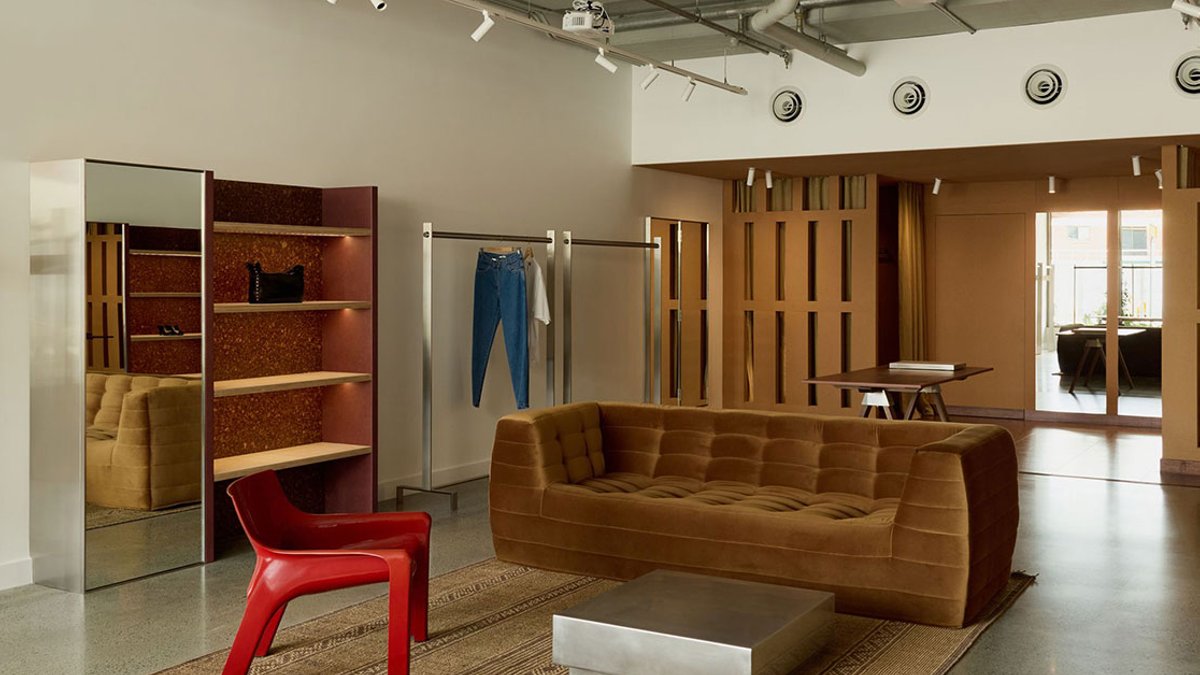
New Bassike Byron Bay opens with a design that leans on reuse rather than fresh construction, a rare stance in a sector where fit‑outs often disappear within five years.
Modular thinking drives the fit‑out
The brief called for restraint. Original concrete floors remain, ceiling services stay exposed, and the existing infrastructure was kept wherever feasible, limiting waste before any new material entered the site.
“We approached the shop design as a sort of kit of parts, distilling the concept into a series of modular shapes, objects and materials that can be reinterpreted across different applications,” said Kelvin Ho, Founder & Director of Akin Atelier. “This, paired with sustainable material choices, felt closely aligned with the values the brand seek to uphold.”
The modular vocabulary lets each outlet share a family resemblance without looking identical. When a fit‑out reaches the end of its life, components can be reshaped rather than discarded, a practical answer to the industry’s disposable reputation.
Akin Atelier’s involvement with Bassike stretches back more than a decade, encompassing a series of flagship stores, concession points inside larger retailers, and the brand’s head office. That continuity has allowed the design team to refine a language of parts that speaks to the label’s aesthetic while remaining adaptable to varied footprints and local conditions.
Because the system is built on interchangeable modules, future sites can inherit proven elements—such as the exposed service ducts or the concrete slab finish—while still accommodating site‑specific constraints. This approach reduces the need for bespoke fabrication on each new project, translating into lower embodied carbon and a shorter construction timeline.
Retail interiors are among the most disposable things the industry produces. Designing for reinterpretation is a more useful answer than most.
Materials and local craftsmanship
Warm, domestic tones dominate the palette: deep reds, rich chocolate hues, cork and woven textiles. Furniture blends Australian design with international vintage, featuring a sofa from Byron Bay’s Tigmi Trading, display tables by Henry Wilson, cork stools by Jasper Morrison for Vitra, a custom rug by Beni Rugs and a Vico Magistretti lounge chair.
Related: Mecca Coffee opens on Foley Street
Australian firm Defy supplied two custom‑coloured recycled‑plastic panels made in Sydney from post‑consumer plastic diverted from landfill.
Local trades completed the work, with construction by Urban Spaces Building Co. and steel fabrication by Na Mathie Steel Fabrication in nearby Binna Burra.
The kit‑of‑parts logic, while quiet, offers a subtle advantage: it creates a cohesive brand language that can travel across coastal towns, yet each space retains its own character.
Opening in Byron Bay feels like a natural extension of Bassike, says Deborah Sams, Founder & Creative Director, drawing the line back to the brand’s Avalon home. “Two coastal towns, similar temperaments. On this evidence, the kit travels well.”
Cork, harvested without felling trees, is carbon‑negative, biodegradable, and durable enough to earn its keep.
Photography by Jessie Prince captures the interplay of light on the exposed services and the tactile contrast between the recycled panels and the natural cork, documenting how the design balances minimalism with warmth.
Overall, the project shows how a disciplined approach to material reuse and modular design can extend a brand’s physical identity without demanding endless new resources.


