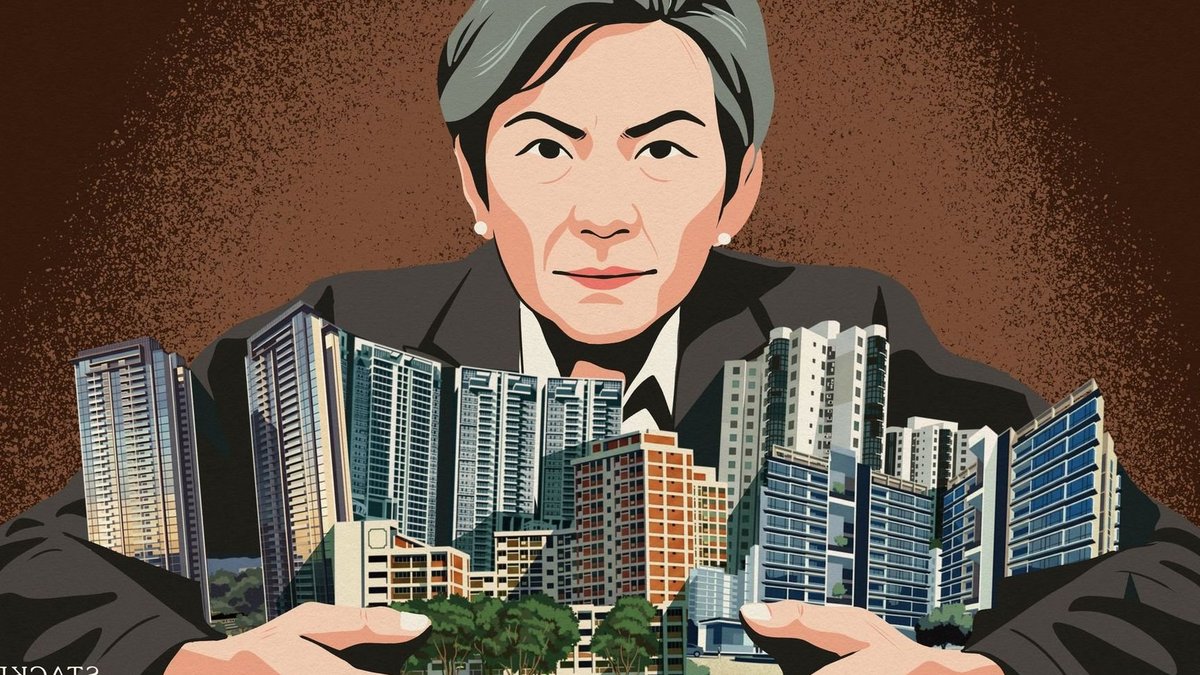
A writer who shaved their head in 2023 argued that taxing wealthy Singaporeans for owning multiple properties would not resolve the country’s housing affordability crisis. Instead, the discussion should center on whether such policies would effectively release homes into the market and whether those homes would benefit the people who need them most.
These units are heavily subsidized and strictly limited—no owner can hold more than one. The private market, where most property accumulation occurs, serves a different purpose. The private sector accounts for only 20% of total homeownership.
The central question remains whether forcing wealthy owners to sell off extra properties would free up enough homes for average Singaporeans. The answer, according to the analysis, is unlikely. Even if investors released units into the resale market, most young couples could not afford them. A typical two-bedroom condo, often the smallest unit investors hold, remains beyond reach for most first-time buyers without parental financial support.
Why Forced Sales Won’t Fix Demand
The problem extends beyond affordability. Units released into the market may not meet the needs of families. During past investment booms, many buyers purchased one- or two-bedroom condos to rent out while living in larger properties. If similar units flood the resale market now, they will not help families requiring three-bedroom homes or more. A young couple buying a 650-square-foot unit today may later struggle when their family grows, forcing a sale; but with no guarantee of finding a better deal in an unstable market.
Taxing multiple properties could still yield benefits, though not the ones often assumed. The real issue is capital allocation. Money tied up in real estate is not flowing into businesses, stocks, or innovation. Singapore risks becoming a rentier economy, one where wealth is hoarded in property rather than reinvested in growth. This shift has long-term consequences for the country’s economic competitiveness.
Restricting this practice would free up more flats for young families who cannot afford private housing. Another strategy could involve tightening financing rules for investors, reducing leverage and making property less appealing as a passive income source.
Property Taxes Alone Can’t Solve Inequality
The same writer also emphasized that any discussion of property taxes must clarify how wealth inequality is defined and whether real estate alone can address it. The argument for taxing multiple properties often assumes it would directly reduce inequality, but the reality is more complicated. Property wealth in Singapore is not solely about ownership; it is tied to the broader economic system that allows land values to rise. The government’s infrastructure, stability, and growth have collectively driven up prices, meaning property appreciation benefits are tied to collective success. If this success is concentrated in a few hands through inheritance or speculative purchases, inequality persists even if taxes target real estate alone.
An inheritance tax could be one solution, but its design would require careful consideration. Singapore previously implemented such a tax in 2008, but its effectiveness depended on structure. For example, an elderly household relying on an inherited family home for stability could face hardship if taxed without flexibility. Policymakers would need to include protections for surviving dependents, such as deferred payment options, especially if the estate’s primary asset is property but beneficiaries lack liquid funds. Without these safeguards, the tax could disproportionately harm vulnerable groups rather than address systemic inequality. The challenge lies in ensuring the policy does not create new hardships while still encouraging broader wealth redistribution.
The most expensive new private home sale last week was The Continuum, priced at S$5.239 million for 1,905 square feet, or S$2,750 per square foot. At the opposite end of the market, Altura offered the cheapest new unit at S$1.628 million for 980 square feet, or S$1,662 per square foot. Among resale properties, Nassim Park Residences topped the list at S$16 million for 3,477 square feet, while Prime Residence was the most affordable at S$590,000 for 398 square feet.